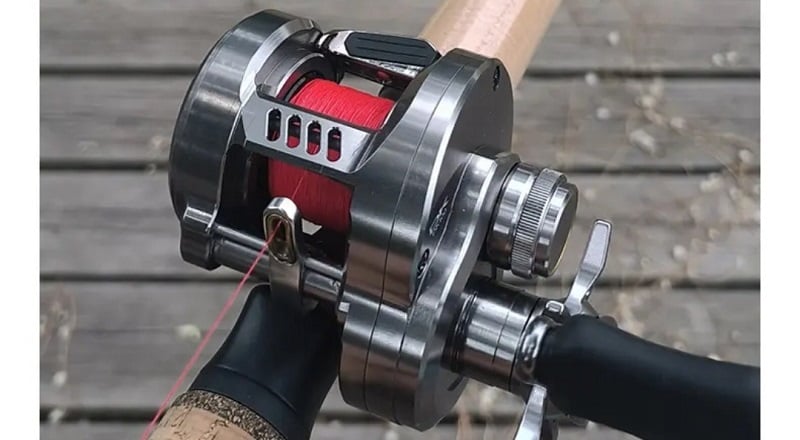

I still think the 'Kuying Teton' deserves the respect it gets. That part has not changed for me. When people talk about the Teton, they usually talk about sensitivity, the surprising fun-to-price ratio, how nicely it fits creek work, and how it makes small lures feel lively instead of numb. So when I keep seeing anglers say, 'I want something longer than the Teton,' I do not hear that as a complaint about the rod failing. I hear something more specific, and honestly more useful: 'they are running into a bank-fishing reach problem, not a rod-quality problem'.
That is an important distinction. A lot of online tackle arguments get muddled because people act like 'better' and 'longer' are the same thing. They are not. Sometimes I do not want a better rod. I want a rod that covers a different piece of water. That is exactly where this little Kuying Teton conversation gets interesting. The rod itself is known, liked, and trusted by a lot of BFS anglers. The frustration kicks in when somebody wants a '7-foot-plus ultralight casting setup' for wider banks, more reach, easier line control, or broader water coverage, and suddenly the easy answers dry up.
I get why that happens. I have stood on enough U.S. shorelines to know the feeling. Put me on a narrow trout creek outside 'Asheville, North Carolina', and a shorter finesse rod feels clever, almost surgical. Put me on a more open bank in 'Boise, Idaho', with a long gravel edge, patchy current, and fish that might be feeding fifteen feet farther out than I can comfortably reach with a compact rod, and the whole mood changes. A longer rod is no longer some abstract preference. It starts feeling like access.
That is really the heart of this topic for me. The Teton lineup scratches one kind of finesse itch very well. But bank anglers are not always asking for more sensitivity or more backbone. Sometimes they are asking for more 'useful length'. More line pick-up on a long drift. More control over the angle of a tiny spoon. More ability to guide a little minnow bait around shoreline grass. More reach when the fish are not tucked under your feet but are not exactly offshore either.
And once I frame it that way, the conversation gets much clearer. The Kuying Teton is not being pushed aside because it suddenly became 'not good enough.' It is being pushed aside because some anglers want a very specific tool shape that is surprisingly hard to find: 'a longer UL or near-UL casting rod that still keeps the finesse soul of BFS alive'.
That gap matters a lot more than tackle companies sometimes realize.
There are days when one extra foot of rod length feels more useful than another hundred dollars of reel. That is not marketing talk. That is just real shoreline fishing.
When I am stuck on the bank, I cannot always fix a bad casting angle by moving ten feet to the left. There may be brush behind me. There may be riprap under me. There may be a fence, reeds, dock cables, or some weird slope that turns every step into a stupid risk. So I start leaning on rod length to do things that a boat angler can solve with positioning.
A longer ultralight setup helps me in a few very specific ways. It helps me 'reach around shoreline clutter'. It helps me 'hold more line off the water' on a tiny float or micro jig. It helps me 'steer fish and lure path a little better' when the edge is messy. And maybe most importantly, it makes a cast to 'just over there' easier when 'just over there' is actually that annoying zone where the fish are obviously active but still a little outside the sweet spot of a shorter rod.
I have felt this a lot on urban banks around 'Austin, Texas'. Small ponds and park lakes often look easy until you start fishing them with truly small lures. The water you want is not always far, but it is often awkward. Maybe there is a band of shallow grass. Maybe there is a little concrete lip. Maybe I need a soft presentation that lands beyond the obvious edge and then works back through it. Suddenly, a longer finesse rod feels less like a luxury and more like the difference between fishing the area and merely admiring it.
The same thing happens on moving water. In places around 'Tacoma, Washington' or 'Spokane, Washington', if I am trying to manage a tiny lure in current from the bank, rod length changes how cleanly I can follow the drift and how much slack I can keep from doing stupid things. The fish do not care whether I call it BFS, UL, or panfish gear. They care whether the bait arrives looking believable.
That is why I do not roll my eyes when somebody says they want 7'+ and still want ultralight feel. That is not gear-hoarding nonsense. That is a real usage problem.
KUYING fishing rod. Latest Buzz & Buyer Beware (Constantly Updated)
Pro Tips for Anglers
This is where the Teton discussion turns from 'which rod is better?' into 'what even exists?'
If I want a short or medium-short finesse casting rod, the world gets friendlier. If I want a longer ultralight spinning rod, there are also decent options. But when I specifically want a 'longer ultralight casting rod' that still feels like a proper finesse tool and not some compromised oddball, the list gets thin fast. That is why these Reddit threads end up jumping brands almost immediately. Not because everyone suddenly dislikes Kuying. Because the shopping field narrows down so fast that anglers get pushed into hunting mode.
And I think that is the most honest way to talk about the Teton 'pain point.' The pain point is not, 'This rod underperforms.' The pain point is, ''I like what this rod does, but I want more shoreline coverage than this family of rods naturally gives me.''
That is a very different kind of problem. It is a lineup problem. A category problem. A geometry problem. It is not really a performance scandal.
I have noticed that once anglers admit this to themselves, they get less frustrated and much smarter. Instead of trying to force one rod to be their creek rod, pond rod, dock rod, tiny-spoon rod, micro-crank rod, and long-bank-coverage rod at the same time, they start building a more realistic system.
Usually that system looks like this:
A shorter or mid-length rod such as a Teton stays in the lineup for 'tight quarters, smaller water, and the most fun finesse presentations'. Then a second outfit handles the stretchier water. Sometimes that second outfit is not another casting rod at all. Sometimes it is a longer spinning rod, because that is simply the cleaner answer if true ultralight reach is the main goal.
People resist that answer at first because it feels like cheating on BFS. I used to feel that way too. Then I went bank fishing enough to stop being sentimental about categories.
If the job is genuinely 'small lure, longer reach, easier management, and less argument with physics,' spinning gear still solves a lot of problems beautifully.
I think some anglers chase length without being clear on the trade. The trade is real, and if I ignore it I usually end up disappointed.
A longer rod can buy me 'distance', or at least more practical distance. It can buy me 'better line control' on light rigs. It can buy me 'a wider effective bank-fishing lane'. It can buy me 'cleaner hook guidance' when I am fishing past grass edges or light cover. And with certain fish, it can also buy me a nicer, more forgiving fight because the blank gives the fish a little more room to load up.
What it can take away is just as important. Long rods can feel clumsier in brush. They can feel less cute and precise in little creeks. They can lose some of that 'flick it underhand and laugh' charm that makes short finesse rods addictive. And once I start stretching toward longer lengths while insisting on true ultralight casting performance, I can also give up some comfort with the very smallest lure weights. That is not a defect. It is the system telling me that every gain comes from somewhere.
This is why the best anglers I know do not talk about rod length like it is automatically superior. They talk about it like a tool choice. If I am fishing tucked-in water with overhanging branches near 'Knoxville, Tennessee', I may actively prefer the shorter Teton personality. If I am standing on an open bank with scattered wind and the fish are cruising just outside easy range, then suddenly the longer rod makes a lot more sense.
One of my favorite little realizations in finesse fishing is that a rod can be brilliant and still not be the one I want tomorrow morning.
The Kuying Teton sits right in that zone for me. I can admire it and still admit that there are bank situations where I want more length than that lineup naturally leans toward.
Disclosure: As an Amazon Associate I earn from qualifying purchases.
'The closest 'easy answer' for anglers who really mean more reach, not more mystery'
'Shimano Sensilite Casting Rod' ?this is the kind of rod I point to when someone says, 'I love finesse casting, but I need a longer bank tool than my Teton.' It is not pretending to be a magical 7 ? true-UL casting unicorn. It is better thought of as the practical bridge: more casting reach, more useful bank coverage, still very much in the finesse conversation.
'The honest 'I care more about shoreline coverage than staying married to casting gear' option'
'Okuma Celilo UL Spinning Rod' ?when I want true long-light behavior from the bank, I stop acting like that has to be a casting setup. The longer Celilo UL models are exactly the kind of rods that make tiny jigs, floats, and micro spoons feel easier to place and easier to manage on broader water.
If I already owned a Kuying Teton and liked it, I would not dump it. I would keep it where it shines.
I would treat the Teton as the rod for 'tight banks, creek-style accuracy, lighter close-range work, and the kind of finesse fishing where rod personality matters as much as sheer coverage'. Then I would add something longer for the open-bank problem. That second rod would depend on how stubborn I am about staying with casting gear.
If I absolutely insist on keeping the casting feel, I would move toward a longer light-power casting rod and accept that I am making a deliberate trade. I am giving up some of the purest UL identity in exchange for more reach and a wider working zone. That is not failure. That is a grown-up tackle decision.
If I care less about category purity and more about results, I would seriously consider a longer ultralight spinning rod. This is especially true if my 'longer than the Teton' itch is really about trout magnets, mini jigs, tiny spoons, float work, or soft presentations where line control and launch comfort matter more than thumb control.
That second path is not as glamorous in BFS circles, but on the water it can be incredibly smart.
I have had mornings around 'Madison, Wisconsin' where a short finesse casting rod was more fun for the first hour, then the fish slid out a little farther, the breeze picked up just enough to get irritating, and suddenly the setup I wanted was the longer light one, not the cuter one.
That is the sort of real-life switch that tackle discussions should talk about more.
'The reel I like for turning that longer, lighter backup into an actual everyday outfit'
'Pflueger President Size 20 Spinning Reel' ?this is the kind of reel that makes a long UL bank outfit feel balanced instead of fussy. If somebody is finally admitting that a second, longer setup is the clean answer, this is exactly the sort of reel I would show them because it keeps the build practical, smooth, and easy to live with.
I also think line choice becomes even more important once the rod gets longer. A longer light setup can feel wonderful with the right line and annoyingly vague with the wrong one. I do not need anything exotic here. I just need something slick, thin, and trustworthy enough that it does not waste the benefits I bought with the longer blank.
'The line that keeps the whole longer-finesse idea feeling quick instead of sleepy'
'PowerPro Super Slick V2' ?when I am trying to keep a longer finesse setup crisp from the bank, I want a braid that stays slick and responsive. This is one of those small gear decisions that changes the whole mood of the outfit.
'Scenario one: open pond edges and park-lake shorelines.' This is the most obvious one. If I am fishing a place where I have room behind me and the fish are roaming just far enough out to be irritating, I want the extra reach. I felt this around suburban water in 'Raleigh, North Carolina'. Fish were not way offshore. They were just out far enough that a slightly longer, more coverage-oriented outfit made the whole thing easier. That is the zone where I stop trying to romanticize the short rod and just pick the more useful one.
'Scenario two: long current seams from the bank.' A longer light or UL setup shines here because it does more than cast. It helps me guide. It helps me lift. It helps me keep less junk line on the water. On river edges, that can matter as much as distance. This is one of the few scenarios where a longer rod can feel like it is doing three small helpful things all at once.
'Scenario three: float-and-finesse work for trout, panfish, or small river fish.' This is where I think many anglers accidentally fight their own gear. They want to keep everything casting-based because that is the identity they enjoy, but the actual technique is begging for a longer spinning rod. Tiny float, little bait, little jig, longer sweep, better drift angle ?that is not betrayal. That is just smart rigging.
'Scenario four: broader water with light cover rather than tight cover.' The longer rod becomes more attractive as soon as I stop needing to fire short, sneaky casts under branches and start needing to cover water cleanly. On a place like 'Lake Hefner in Oklahoma City', or any comparable open bank where fish can slide in and out of range, longer light tackle makes a lot of sense.
And that is the funny thing about this entire Kuying Teton topic. Once I map it to actual water, the emotion drains out and the answer gets simpler. The Teton was never the villain. It just was not built to solve every 'I want more water coverage from shore' problem.
I think this is the piece that deserves to be said clearly, because it is easy to misunderstand the internet chatter.
When somebody asks for a longer UL rod than the Teton and ends up looking at other brands, that does 'not' automatically mean the Teton lost. It often means the Teton did its job so well in its own lane that the angler now understands their next need more precisely. The next need just happens to live outside that lane.
That is a healthy way for a product line to be challenged, actually. The angler is not saying, 'This thing is junk.' The angler is saying, 'This taught me what I like, and now I want a related tool with more reach.'
That is a compliment hidden inside a shopping problem.
I would even go a step farther. For a lot of readers, the smartest move is not obsessing over whether a 7 ? or 7 ? replacement is theoretically 'better' than a Teton. The smarter question is this: 'what part of my bank fishing is still underserved?'
If the answer is distance, maybe a longer light casting rod is enough.
If the answer is true ultralight launch comfort and line control, maybe a longer spinning rod is the clean answer.
If the answer is 'I mostly fish tight water and only occasionally wish for more reach,' maybe the Teton stays exactly where it is and I stop trying to make one rod cover every mood swing I have on the bank.
That last one is worth saying because a lot of tackle frustration comes from trying to make one outfit feel perfect in every piece of water. It almost never does.
This one is still a solid on-the-water look at the Teton family and helps ground the discussion in actual fishing instead of just catalog specs and hot takes.
https://www.youtube.com/watch?v=YPmTAe8soko
I do not think the Kuying Teton has a performance reputation problem here. I think it has a 'reach expectation problem'. Bank anglers are asking it to cover more water than its natural personality was built for, and then they start shopping outside the family because the market for true long UL casting rods is still strangely thin.
That does not make the Teton less good. It just makes the next purchase easier to understand.
If I fish tighter, smaller water, I still love what the Teton represents. If I fish more open banks and want to cover more water with light tackle, I stop pretending that length is a minor detail and start treating it like one of the main features.
That is really the whole theme here: the Teton still makes sense, but longer bank-fishing reach is its own problem, and it deserves its own tool.
Reddit: UL rods
Reddit: How much more sensitive can it get?
Reddit: Where can I get an ultralight rod that doesn't take 2 months to ship?
YouTube: Kuying Teton TTS602LS tested and reviewed whilst fishing


