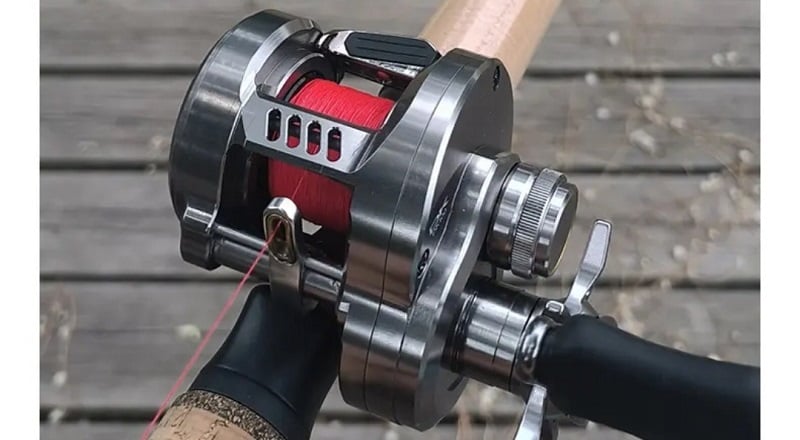

I think one of the strangest things about the 'Kuying Teton' is that it is no longer suffering from obscurity. It is suffering from success. Too many people know the name now, too many versions circulate in listings and videos, and that creates a very modern kind of tackle headache: two rods can both say 'Teton', both look close enough to feel 'basically the same,' and still fish like two completely different tools once they hit the water.
That is why I keep seeing more anglers stop asking 'Is the Kuying Teton good?' and start asking a much smarter question: 'which exact Teton model number am I actually looking at?' That shift is healthy. It means buyers are finally understanding that with this rod family, the real mistake is not usually choosing a bad rod. The real mistake is choosing the wrong version of a good rod.
I have seen this happen over and over. Somebody watches a nice YouTube clip of a Teton working tiny trout water. Then they find a marketplace listing with a familiar green blank, similar photos, a title stuffed with variant names, maybe even a 'V2' mention, and they assume they are buying the same basic feel. Then the rod arrives, and the first trip is confusing. The tip feels firmer or softer than expected. The rod likes a different lure window than the one they had in mind. A bait that should have felt effortless suddenly feels awkward. A lure that should have been the sweet spot feels merely okay.
That is not always buyer error, either. Teton listings can genuinely be messy. The official lineup itself is broad enough to overwhelm a first-time buyer, and reseller titles often make it worse rather than better. For enthusiasts, that variety is part of the charm. For beginners, it can feel like every listing is forcing them to take a miniature exam before checkout.
The good news is that the confusion becomes much less scary once I stop treating 'Teton' as one rod and start treating it as a 'family name'. That is the key move. Once I do that, model codes start meaning something. Lure ratings stop feeling decorative. Tip descriptions stop sounding like tackle-store poetry. The whole thing gets easier.
This is where I tell people to slow down. The first three letters already remove a surprising amount of chaos.
'TTC' is the casting side.
'TTS' is the spinning side.
That sounds basic, but it solves one of the most common beginner mistakes: assuming a familiar model family name means the blank is basically the same in both versions. Sometimes the basic role is similar, sure. But the feel in hand, the way the rod is balanced, the way it loads with certain presentations, and the type of water it feels most natural on can shift enough that this is not a meaningless code at all.
I have watched people shop for a Teton the way they shop for a T-shirt. Same line, same color family, same overall vibe ?should be close enough, right? Not really. With these rods, the code is part of the rod’s identity. Ignore it, and the buying process gets sloppy fast.
The second thing I tell people is that 'series names inside the Teton family matter just as much as TTC versus TTS'. A Teton Stream, a Teton UL, a Teton SUL, and a Teton L are not tiny variations of the same rod. They are different answers to different lure problems. That is why model confusion is not just an annoying shopping issue. It actually changes what the rod does for you on the bank.
If I am fishing a tiny creek outside 'Asheville, North Carolina', flicking little jigs or micro plugs under overhanging branches, one Teton may feel magical while another feels merely acceptable. If I am walking an open bank in 'Madison, Wisconsin', covering panfish water with small hardbaits and slightly heavier finesse lures, the ranking can flip. That does not mean one rod is better. It means the code matters because the use case matters.
This is the heart of the whole problem.
On paper, it is easy to think that a Teton Stream model and a Teton UL model are cousins close enough to blur together. In real use, that can be a bad assumption. The official specs alone already show meaningful splits in 'lure range, line range, tip structure, and action'. Then once anglers add real-world feedback, the difference becomes even clearer.
One of the cleanest examples is the famous '510S versus 602LS' contrast in the Stream family. The 510S versions are the super-light, micro-minded side of the discussion. They are the ones that keep coming up when anglers talk about sub-1 gram loading, Trout Magnet-style finesse, visual bite detection, and that odd little magic you only get when a rod’s tip is built to respect tiny lures instead of merely tolerating them.
The 602LS versions are not 'the same rod, just a bit longer.' That is exactly the kind of thinking that creates regret. They move into a very different zone: more honest small-hardbait work, more comfortable 2 ? gram territory, more normal line ratings, more general-purpose light-game behavior. They are still finesse rods, but not the same finesse answer.
Then the UL family steps in with its own 1 ? gram, medium-action logic, which is yet another answer. Then the L family, especially the 662L, sits above that again as the more all-around 2 ?0 gram light-finesse option, including newer '-K' guide-upgraded versions.
So when a buyer says, 'I saw a Teton on YouTube and want that one,' my first reaction is never 'Great, buy a Teton.' My first reaction is, 'which Teton did you actually just watch?'
KUYING fishing rod. Latest Buzz & Buyer Beware (Constantly Updated)
Pro Tips for Anglers
Disclosure: As an Amazon Associate I earn from qualifying purchases.
'If I want one mainstream reel that helps me judge the rod honestly'
'Shimano Curado BFS' ?when the rod side is already full of model-code confusion, I like making the reel side boringly clear. A proper BFS reel with a shallow spool and proven brake system keeps the test honest, especially when I’m trying to figure out whether a Teton model is truly a 510S-style micro rod or a more normal 602/662 kind of light rod.
'If I want the line to stop muddying the answer'
'PowerPro Super Slick V2' ?I reach for this when I want a Teton’s blank and tip to tell the truth. Slick braid does not magically fix the wrong rod, but it helps me separate real rod character from line-induced dullness.
If I am helping a friend buy a Teton, I do not let them start with the seller title. I start with five questions.
'1. What exact model code is it?'
I want the full code, not 'a green Teton' and not 'the trout one.' TTC510S, TTS602LS, TTC632UL, TTS662L ?those are not interchangeable thoughts.
'2. Is it Stream, UL, SUL, or L?'
If the series is unclear, the purchase is already getting risky.
'3. Is the tip solid, grafted, hollow, or full hollow?'
This matters more than many first-time buyers expect. A micro-lure rod with a solid or grafted tip behaves differently from a fuller hollow-tip light rod, even when the family name on the blank is the same.
'4. What is the real lure window I plan to throw?'
Not the fantasy lure window ?the real one. Tiny Trout Magnet work? 1.5 ? gram micro-jigs? Small hardbaits in the 2 ? gram zone? Small perch and trout plugs? That answer should pick the rod, not the other way around.
'5. What handle and hardware version am I looking at?'
This is where 'V2,' '-K,' updated guide builds, and reseller language start confusing people. Some updates are meaningful. Some are mostly listing noise. Either way, I do not buy until I understand what version is actually in the cart.
That sounds obsessive, but it is not. It is just how I stop myself from buying a rod by color and branding alone.
Let me say this bluntly: the '510S' is not simply a smaller 602 or a cuter version of a 662L. It sits in its own lane.
This is the rod family I think people misunderstand most when they buy based only on 'Teton reputation.' The 510S has built its name around the very low end. That is why it keeps showing up in conversations about Trout Magnets, micro-jigs, and even sub-1 gram experiments. The solid-tip or grafted-tip behavior is part of the story, not a footnote. That is why some anglers absolutely fall in love with it, and why others buy it expecting a general light-finesse rod and then end up puzzled.
If my real goal is tiny presentations in tight water around 'Boise, Idaho' or little stream pockets where I care more about loading microscopic bait than I care about broader lure versatility, the 510S makes beautiful sense. It is the kind of rod that can make a silly-light jighead feel possible instead of purely theoretical. That is exactly why it gets so much affection.
But if I buy it because it is the 'famous Teton,' then try to make it my main little hardbait rod, or my general pond rod, or my one-and-done all-round light setup, I might be asking the wrong question of it. That is not the rod’s fault. That is model confusion wearing a familiar brand name.
This is one reason I think current buyers are right to demand the exact model number before committing. The 510S reputation is so strong that it can accidentally cast a shadow over the rest of the lineup.
'If I want one bait kit that instantly tells me whether I really needed a 510S-type rod'
'Trout Magnet TNT Kit' ?this is one of the cleanest 'truth serum' kits I can hand to a Teton buyer. If a model is supposed to shine at the low end, baits like these expose it very quickly. They also stop me from pretending I bought a micro rod when what I really bought was a 2 ? gram small-hardbait rod.
The '602LS' is where a lot of buyers drift into trouble, because it still feels 'trouty' and 'finessey' enough in appearance that they assume it overlaps more with the 510S than it really does.
It does not.
On the water, the 602LS makes much more sense to me when I’m working proper small hardbaits, little spoons, light moving baits, or finesse lures that live in that cleaner 2 ? gram neighborhood. This is where I would start if I were fishing moving water in 'Tacoma, Washington' for trout and perch with slightly more normal lure mass, or working a pond edge with compact plugs and little cranks where I want the rod to feel crisp without living in the micro-obsession zone.
The key difference is that the 602LS is a better answer to the question, 'I want a light rod that still feels like a rod,' while the 510S is often answering a more specific question: 'I want a rod that respects tiny lures and makes them load properly.' Those are not the same thing.
That is why I think some buyers get disappointed in the wrong direction. They expect the 602LS to behave like a lower-end Stream micro wand, or they expect the 510S to behave like a more versatile little hardbait rod. Both disappointments are really the same mistake: buying the family name instead of the job description.
The 'UL' Tetons are interesting because they look like compromise models, and sometimes that is exactly why they are smart.
If I know I do not want the extra specialization of the 510S but also do not really need the higher lure-range personality of the 602LS or 662L, then the UL models can make a lot of sense. A 1 ? gram medium-action rod is often the kind of practical middle ground people should have bought in the first place.
But this middle ground also creates its own confusion. Buyers see 'UL' and assume the same rod will behave like a dedicated micro specialist. That is not guaranteed. Others see 'medium action' and assume it will feel dull. That is not automatically true either. The point is that the UL models are another separate answer, not a watered-down copy of the Stream models.
I actually like this family for people who fish places like 'Austin, Texas' pond banks or mixed trout/panfish/bass situations where they want a broader finesse window and do not want their rod identity dictated entirely by sub-1 gram dreams. In real life, a lot of anglers are happier there than they expect.
It is just not the same purchase as buying the famous micro-friendly 510S, and that difference needs to be understood before checkout, not after the first trip.
The '662L' sits in a different psychological role again. This is the Teton I think of when someone wants a more general light-finesse rod, especially for slightly larger perch, panfish, trout, or small bass use. It is not just about being longer or rated heavier. It is about being less obsessed with the very bottom of the lure scale.
That matters a lot. Because if I am fishing broader water in 'Madison, Wisconsin', working little cranks, small jigs, or finesse presentations where 2 ?0 grams is the honest operating zone, the 662L may actually be the smartest Teton in the conversation. Not the cutest. Not the most internet-famous. Just the smartest.
This is also where handle builds and updated guide versions start mattering a little more in buying logic. A 'TTC662L-K' is not identical to the standard 662L listing. That does not mean everybody needs the upgraded one. It means 'looks basically the same' is not enough. If I care about the exact build I am paying for, I want to know whether I am getting the standard guide version or the upgraded K-guide version.
That is the larger theme here: Teton confusion is not one confusion. It is several stacked on top of each other. Casting versus spinning. Stream versus UL versus SUL versus L. Solid versus hollow. Standard versus updated guide builds. Reseller wording versus official wording. YouTube nickname versus catalog code.
No wonder people keep asking for the exact model number.
'If I want one tiny hardbait that separates 'micro specialist' from 'small hardbait all-rounder' very quickly'
'Rapala Nano Rap' ?I love this kind of lure for solving rod questions fast. If a Teton is truly the right model for your small-hardbait work, you will feel it here. If the rod is really a micro-jig specialist and you bought it hoping for broader hardbait duty, this kind of lure exposes that pretty fast too.
I like tackle videos. They help. But they also create confusion when buyers do not realize how model-specific the good ones are.
Recent uploads are still showing exact Tetons ?TTS602LS reviews, TTC510S fishing videos, even 'V2' combo wording in newer uploads. That is useful because it keeps the rods visible. It is also dangerous because viewers sometimes watch a specific model working beautifully, then go shopping with only the family name in mind.
I have done this kind of thing with other tackle families before, so I understand the temptation. A video makes the rod feel emotionally clear. The listing page makes the family feel commercially close. Then my brain stitches the two together and tells me it is probably fine.
That is where problems begin.
If I watched a TTS602LS trout review, then buy a TTC510S because the listing title and photos feel close enough, I did not buy 'almost the same rod.' I bought a different answer. If I watched a V2-labeled combo clip and assume every seller using 'V2' is describing the same update the same way, that is also risky. With a family this broad, the video should narrow my shopping, not simply hype it up.
That is why I now treat Teton videos like I treat lure tests: useful only when I know the exact tool being shown. The video is not the model code. The blank is not the listing thumbnail. And 'same color, same family' is not a serious buying method.
If I had to reduce all of this into one practical routine, it would be this:
'First', get the exact code from the seller.
'Second', verify whether it is Stream, UL, SUL, or L.
'Third', verify lure range and line rating.
'Fourth', verify whether the tip is solid/grafted or hollow.
'Fifth', verify whether the build is standard or an updated version such as '-K'.
'Sixth', ask yourself what you really throw most often, not what sounds fun on a forum.
That last step is the one people skip, and it is the one that would save the most regret.
If most of my real fishing is Trout Magnet-scale micro work, I should not buy a 2 ? gram rod because I got distracted by a pretty review. If most of my fishing is small hardbaits and normal little moving baits, I should not buy the micro legend just because it is famous. If I want broader versatility, maybe the UL or L side of the family is the honest answer.
The Teton lineup is not too confusing to buy. It just refuses lazy shopping.
This one is useful because it is tied to a specific model and actual on-the-water use, which is exactly how a Teton video should be used:
https://www.youtube.com/watch?v=YPmTAe8soko
Reddit: Kuying Teton question!
Reddit: Are the rod tips of the Kuying Teton interchangeable like the AceHawk CU Double?
Reddit: Kuying Teton TTC510S alternatives
Reddit: Got a new trout stick, Kuying Teton TTC602LS
YouTube: Kuying Teton TTS602LS tested and reviewed whilst fishing
YouTube: The lightest BFS set in the World? Kuying Teton TTC510S + ...
The main theme is simple: with Kuying Tetons, the family name is not enough ?the exact model number is the real purchase.
I chose those four Amazon items because each one helps a buyer resolve the exact kind of Teton confusion your topic is about. The 'Shimano Curado BFS' is the 'stable control variable' pick because Amazon’s product page highlights its ultralight shallow spool and Shimano’s 'Finesse Tune Brake (FTB)' system, which makes it easier to feel what the rod is doing instead of blaming a mismatched reel. The 'PowerPro Super Slick V2' is there because Amazon describes it as rounder, smoother, and slicker, which is exactly what I want when comparing a more micro-oriented Teton against a broader 2 ?g or 2 ?0g model.
The 'Trout Magnet TNT Kit' directly matches the low-end model-choice problem because Amazon labels it 'Amazon’s Choice', notes '100+ bought in past month', and the kit centers on '1/64 oz' heads and tiny soft plastics ?perfect for deciding whether you really needed a 510S/SUL-style rod. The 'Rapala Nano Rap' earns its place because Amazon describes it as the brand’s tiniest Rapala, at '1/16 oz', which makes it a very clean 'small hardbait honesty check' for buyers torn between a micro-leaning Teton and a more normal Stream/UL/L option.
The model-selection logic itself is not guesswork: Kuying’s current catalog separates Teton into multiple families and shows meaningful spec differences. The official pages list the '510S Stream' models at '0.3 ?g, 1 ?lb' with a 'half-solid + half-hollow' tip, the '602LS Stream' models at '2 ?g, 3 ?lb' with a 'full hollow' tip, the 'UL' family at '1 ?g medium action', and the '662L' family at '2 ?0g medium-fast' with '-K' guide-upgrade versions. Reddit discussion lines up with that: anglers specifically say the TTC510S’s lower lure rating is tied to the solid tip and that it loads tiny baits differently, while TTC602LS owners repeatedly quote the 2 ?g, 3 ?lb window.


