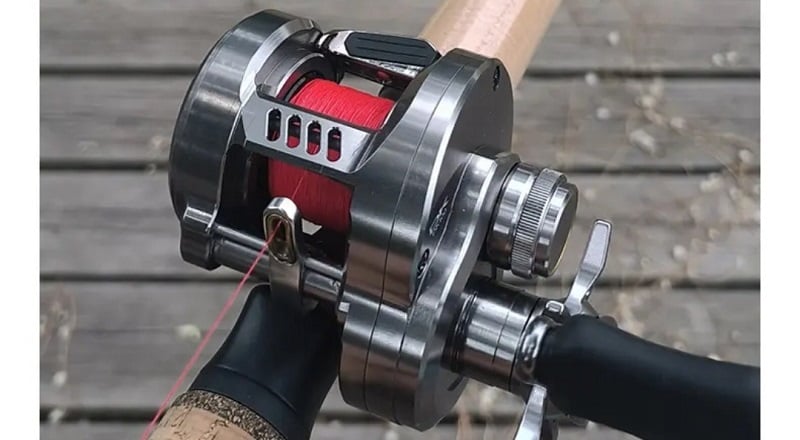

I think one of the most useful tackle conversations happening right now is not about whether the Daiwa Tatula XT BFS rod is good. That part is actually not very controversial. The more interesting question is whether the rod is being understood correctly.
That is a bigger deal than it sounds.
In BFS circles, labels matter a lot. The second a casting rod gets called ultralight, a lot of anglers immediately picture one very specific kind of fishing. They picture micro-jigs. Tiny trout plastics. Little hair jigs. One-gram to three-gram stuff. Small creek presentations where the whole point is making a baitcaster do something that still feels a little ridiculous the first time you pull it off. That is the mental picture people bring into the room.
The current buzz around the Daiwa Tatula XT BFS rod is interesting because it keeps bumping into that mental picture and correcting it. Not aggressively. Not in a 'this rod is bad' way. More in an 'actually, this rod shines in a different lane than some people expect' way.
And honestly, I like conversations like that because they help people buy better.
What I keep seeing from current BFS chatter is pretty consistent. People who own and like the Tatula XT BFS rod do not usually describe it as the perfect tiny-lure ultralight tool. They describe it more like a strong, affordable, power-BFS rod. The tone is usually something like this: yes, it can throw lighter stuff, yes, it is a really good rod for the money, but no, it is not the rod I would build my whole 'micro-lure first' fantasy around if that is really the game I want to play most.
That is an extremely useful distinction.
Because a rod can be excellent and still be mislabeled in the mind of the buyer.
I think that is exactly what is happening here. The pain point is not the rod. The pain point is expectation. And expectation is where a lot of tackle disappointment begins.
If I walk into a Bass Pro Shops near Dallas or scroll late at night with the phrase 'ultralight BFS rod' rattling around in my head, I might be imagining trout-magnet stuff, tiny creek presentations, one-gram jigheads, and the kind of delicate bait finesse that makes spinning gear fans roll their eyes until they try it. If I buy the Tatula XT BF rod with that very specific dream in my head, I may come away thinking the rod is a little stiffer, a little stronger, and a little less magical under four grams than I hoped.
But if I buy the exact same rod thinking, 'I want a budget-friendly power BFS stick for 5 to 12 gram total presentations, small bass plastics, little paddletails, lighter compact swimbaits, mini chatterbaits, Neds, or creek smallmouth stuff,' the rod suddenly makes a lot more sense.
That is why I do not like lazy product opinions. Two anglers can buy the same rod, fish it honestly, and come away with completely different feelings, not because one of them is wrong, but because they were actually buying different ideas.
I have felt that gap myself with BFS gear. Some rods feel amazing once you stop asking them to be something tiny and delicate. Other rods feel brilliant with 1.5- to 3-gram stuff but start feeling too noodly once you move into more practical bass presentations. That is why it is so important to separate 'true micro-lure BFS' from 'power BFS'. They overlap, but they are not the same thing.
Power BFS is where the Tatula XT BF rod seems to make the most sense right now.
And honestly, that is not some downgrade. A good power-BFS rod is a very useful thing.
If I am on a suburban pond outside Austin after work, trying to cover water with a small swim jig, a compact paddletail, a little Ned-style plastic, or one of those finesse baits that still has enough total mass to get moving cleanly, a rod like the Tatula XT BF is actually very appealing. I do not need a rod that folds up on a one-gram lure there. I need a rod that loads with realistic light-bass presentations, still feels accurate, and still has enough backbone that I am not babying every sweep set like I am trout fishing with a spiderweb.
That is a very different use case from standing in a mountain creek outside Knoxville or Asheville, trying to pitch tiny presentations into pocket water and wanting the rod to wake up with almost nothing tied on. Those anglers are usually asking for a truer BFS blank, not a power-BFS blank.
That is exactly where the Tatula XT confusion starts.
I think the most useful current comments around this rod all point in the same direction. The Tatula XT BFS rod is very attractive as a budget entry into bait finesse. It hits way above the price. It feels strong. It feels reliable. It seems especially good when the total lure weight is more like 5 to 10 grams instead of one to three. Some users still push it lighter, especially with a good reel, light line, and clean casting form. But that is very different from saying it is happiest there.
That difference matters more than people think.
A rod does not only tell you what it can do. It also tells you what it wants to do. Some rods can technically toss lighter baits but do not feel especially alive doing it. Some rods become wonderful only once you reach that 'ah, now it is loading' point. That is the best way to describe what I think is happening with the Tatula XT BF rod. It is not failing under tiny weight. It is just much more natural once you get into the power-BFS zone.
And the phrase 'power BFS' is worth slowing down for, because a lot of new buyers hear it and think it means 'not real BFS.' I do not think that is fair at all. A lot of the original spirit behind bait finesse, especially on the bass side, was not about who could cast the smallest humanly possible bait. It was about making low-profile casting tackle useful with lighter, more precise presentations than traditional baitcasters handled gracefully. That means a 5- to 12-gram rod can still absolutely belong in the BFS world. It is just operating in a different neighborhood than the trout-magnet crowd.
I actually think that is why the Tatula XT BF rod is getting attention. It gives anglers a pretty honest doorway into bass-oriented BFS without pretending to be something hyper-specialized. That makes it more valuable than some people realize.
Daiwa baitcasting fishing rod Latest Buzz & Buyer Beware (Constantly Updated)
Pro Tips for Anglers
The problem is that the label can accidentally pull in the wrong buyer.
If I am the kind of angler who really wants to fish 1.5- to 3-gram baits around ultralight creek scenarios, I want a rod that feels more like a true micro-lure tool. I want the blank to start loading earlier. I want the rod to stop making me 'help' the cast so much. I want the rod to feel like the lighter presentation is normal, not like I am coaxing it into behavior it did not wake up wanting that morning.
That is where rods like the Phenix Classic BFS or Dobyns Sierra Ultra Finesse start making more sense. Those rods are clearer about who they are for. They are not pretending to sit halfway between worlds. They are much more explicit about living in that true BFS lane. That does not automatically make them better rods overall. It just makes them better rods for a more specific expectation.
And honestly, that is what a lot of these buying decisions come down to. Not 'good' versus 'bad.' More like 'well-matched' versus 'mis-matched.'
I think a lot of buyers still underestimate how much the reel changes this discussion too.
A rod that feels only okay under four grams with the wrong reel can start feeling much more respectable with the right one. That is where something like the Shimano Curado BFS becomes such an easy recommendation. A real BFS reel with a shallow spool and a brake system designed for lightweight lures gives the Tatula XT BF rod a much better chance to fish at the bottom of its useful range without feeling clumsy. It does not transform the rod into a trout-magnet wand, but it does make the whole combo feel more coherent.
If I put a normal light-duty baitcaster on a rod like this and then try to judge the rod by 2- or 3-gram behavior, I am being unfair to the rod. If I put a proper BFS reel on it and still wish the blank woke up earlier, then I have learned something real. That kind of honesty matters.
I think that is why so many people either fall in love with BFS or get irritated by it. The system matters more than people expect. Rod. Reel. Line. Total lure weight. Leader. Casting style. It is one of the few areas in fishing where one wrong assumption can make the whole combo feel disappointing even when none of the components are actually bad.
That is also why I like the Tatula XT BF rod as a content clue. It teaches readers something useful instead of just making them covet a product. It teaches them that lure-weight windows are not just printed numbers. They are behavior. And the rod’s behavior matters more than the label.
If I were building a BFS combo for creek smallmouth in Pennsylvania, or for light bass work around suburban Nashville retention ponds, or for the kind of weekend pond hopping that a lot of U.S. anglers actually do, the Tatula XT BF rod would make a lot of sense. I would not call it my 'true tiny lure' rod. I would call it my 'practical power BFS' rod. That is a much better identity for it.
That identity also makes the price feel stronger. Around a hundred dollars, I think this rod becomes much more attractive once you stop judging it against the wrong fantasy. You are not buying a boutique specialty wand. You are buying a solid, good-looking, useful, more-versatile-than-expected BFS-adjacent casting rod that can absolutely get you into the style and still hold fish with authority.
There is real value in that.
At the same time, I do not think it helps readers if I stop there and pretend everybody should buy the same thing. Some anglers really do want the lighter end of BFS. Some anglers really are chasing tiny creek lures, trout presentations, tiny hardbaits, or the kind of finesse work where 1.5 to 3 grams is not an occasional trick but the whole point. Those anglers are not asking for 'a good budget power BFS rod.' They are asking for something else, and it is better to say that clearly than to oversell the Tatula XT BF rod into the wrong hands.
That is why I would frame the shopping question like this.
If your real world is 5 to 12 grams, small bass baits, little moving baits, compact soft plastics, and light bass fishing where you still want backbone, the Tatula XT BF rod is a very smart buy.
If your real world is 1 to 4 grams and you want the rod to feel awake at those weights instead of merely tolerant of them, you should stop letting the Tatula XT label seduce you and move toward a truer BFS blank.
That is not a glamorous answer. It is just the right one.
I think this is also why a lot of anglers who are new to BFS get confused by internet recommendations. They ask one question, but the people answering are actually living in different parts of the style. One guy is creek fishing trout with tiny plastics. Another is fishing bass on 5- to 10-gram baits and calling it BFS. Another is really just fishing ultralight casting tackle and does not care about labels at all. All of them might recommend a Tatula XT BF rod sincerely. But they are not actually solving the same problem.
That is where a rod like the Tatula XT BF becomes misunderstood. It is being reviewed by too many different dreams at once.
Disclosure: As an Amazon Associate I earn from qualifying purchases.
'1) Daiwa Tatula XT BF Rod - the honest power BFS pick'
This is the rod I would show first to readers who really live in the 5 to 12 gram world and want a budget-friendly way into bait finesse without buying something too delicate or too niche. I picked it because the current buzz says the rod is genuinely good - just better understood as power BFS than true micro-lure BFS.
'2) Shimano Curado BFS Reel - the easiest mainstream reel pairing'
I picked this because a real BFS reel makes the Tatula XT BF rod make much more sense at the lower end of its range. The Curado BFS is one of the cleanest big-brand ways to get the shallow spool and lightweight-lure behavior that this style really needs.
'3) Phenix Classic BFS Rod - for readers who really mean tiny-lure BFS'
This is the rod I would point to when somebody keeps saying 'ultralight' and actually means it. If your heart is in the smaller end of BFS and you do not want to talk yourself into a power-BFS blank, this is the cleaner move.
'4) Dobyns Sierra Ultra Finesse Rod - a very practical true-BFS alternative'
I like this one because it splits the difference nicely. It is still a serious finesse rod, clearly built for ultra-finesse casting, but it is also easy to understand and easy to buy on Amazon if somebody wants a truer BFS rod without drifting into obscure territory.
One reason I like this four-product mix is that it teaches buyers something instead of just pushing them toward one rod. The Tatula XT BF rod teaches what a good power-BFS rod looks like. The Curado BFS teaches why the reel matters. The Phenix Classic BFS teaches what a true smaller-lure rod feels like. The Dobyns Sierra Ultra Finesse teaches that there are Amazon-friendly rods built much more clearly around the micro-lure side of the style.
That is a much better shopping framework than just repeating that one rod is 'awesome.'
I think that is also why this current Daiwa buzz matters so much. It gives readers a better vocabulary. Once you understand the difference between power BFS and true micro-lure BFS, a lot of confusion disappears. The Tatula XT BF rod stops being a disappointing 'ultralight' and starts becoming an honest, strong value in the right lane.
And honestly, that is a healthier way to buy fishing gear in general. Not by fighting the product. By understanding what it is actually good at and deciding whether that is what you really wanted.
'Highly related YouTube video'
https://www.youtube.com/watch?v=5M2nGosnDlE
'Sources'
Recent BFS discussion calling the Tatula XT BF a great rod around a 2 to 12 gram lane
YouTube first-impression review of the Daiwa Tatula XT BF rod
BFS thread recommending the Tatula XT as a strong value rod while stressing lure-weight matching
The main theme is simple: the Daiwa Tatula XT BF rod is not a bad ultralight - it is just much better understood as a power-BFS rod than a true tiny-lure specialist.


