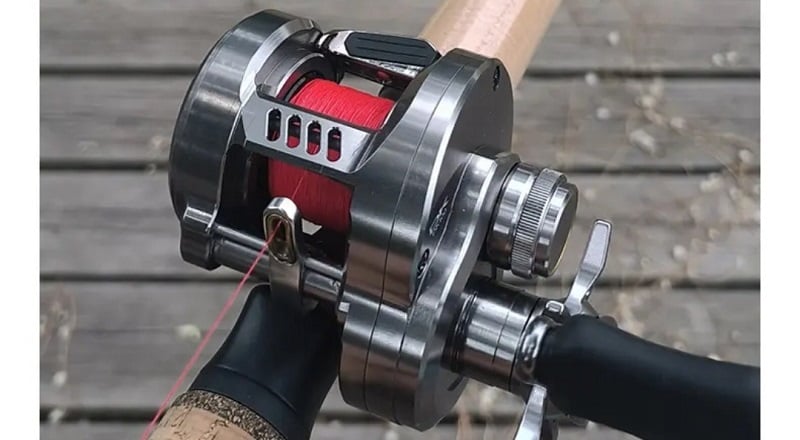

I have seen this happen more times than I can count. A brand-new Daiwa shows up, the box feels expensive, the finish looks beautiful, the handle turns, and then some tiny click, dry whisper, or odd little mechanical note sneaks into the first few spins. That is all it takes. The mood drops immediately. The buyer is no longer admiring the reel. Now he is listening to it like a detective at a crime scene.
That is why this topic matters. The pain point is not only mechanical. It is psychological. Once a reel climbs into a premium or near-premium price band, people expect it to feel silky, calm, and expensive the instant they touch it. They want that first-turn confidence. They want that 'yes, this is exactly what I paid for' feeling. So even a harmless sound can become a trust problem fast.
And honestly, I understand that reaction. If I walk out of Bass Pro Shops in Katy with a new Daiwa, drive home feeling like I just upgraded something meaningful, then hear a little clicking or a dry-sounding note on the first evening, I am not going to shrug that off easily either. That is not paranoia. That is what premium tackle does to expectations.
The interesting part is how current Daiwa discussion has split into two very different camps. One camp says to relax. Fish it a little. Put line on it. Get it under load. A lot of reels sound different in your hand than they do on the water. Some buyers say the odd sound fades after a few trips and the reel settles down once it is actually used. The other camp is less forgiving. Their thinking is simple: if a reel is brand new and expensive, it should not need excuses, rituals, or pep talks. If confidence is already broken, use the warranty and stop trying to romance the problem.
I do not think either camp is crazy. That is what makes this such a good clue for a fishing article.
What I have learned over time is that a new-reel sound can mean a few very different things, and those things do not all deserve the same level of panic. Sometimes it really is a harmless break-in behavior. Sometimes it is a small lubrication variance, especially in the bearings or on a shaft contact point. Sometimes it is setup related and gets exaggerated when a reel is spun in the house with no load and the spool tension or brake settings are not where that reel wants them. And yes, sometimes the buyer simply got a reel that does not feel right and should be exchanged before it ever becomes an emotional burden.
The garage test lies more than people think. A reel that sounds slightly strange while you are free-spinning it in the living room can feel completely fine once you are making real casts and pulling a bait through water. That does not mean every weird sound is fake. It just means hand-spinning a reel is a terrible final judge. Fishing it is the real test.
I think that is where a lot of ordinary anglers get trapped. They buy with excitement, test with fear, then make a decision before the reel has even had one honest session on the water. Sometimes that leads to unnecessary stress. Other times it leads to the opposite mistake, where a buyer ignores a real problem because he does not want to admit the new purchase has disappointed him. Both are common.
My own rule is pretty simple. If a new Daiwa makes a sound but still feels smooth, does not worsen under load, and the sound fades or becomes irrelevant once I am actually fishing, I do not rush to declare it defective. If the reel feels rough, inconsistent, gritty, or starts making me think about the mechanism more than the cast, then I stop pretending and treat that like a trust problem, not just a sound problem.
That difference matters because fishing reels are not only tools. They are mood devices. A reel that nags at your brain can quietly ruin the whole setup. The cast might be fine, but you are no longer relaxed. You are listening between every turn of the handle. You are wondering if the next weird sound means a future repair bill. That is not how a premium purchase should feel.
I have felt that exact tension on very different kinds of water. I remember standing on a small reservoir outside Austin, throwing a compact moving bait, and realizing I was paying more attention to the reel than to the wind angle or the retrieve speed. That is when I knew something had gone wrong mentally, even if the reel was technically still doing its job. I have had the same feeling near Charleston marsh edges, where I should have been watching bait movement and current lines but instead found myself thinking about the sound the reel made in the truck before launch. Once that thought gets into your head, it is hard to fish naturally.
That is why the right answer is not always 'buy the most expensive Daiwa you can afford.' Sometimes the right answer is 'buy the Daiwa whose role, design, and price point make you least likely to spiral over a harmless sound.' That is not a glamorous buying rule, but it is a smart one.
For this exact topic, I would break the shortlist into four practical personalities.
The first is the reel I would hand to the widest range of readers: the 'Tatula SV TW 100'. This is the one I like for buyers who want premium-ish Daiwa smoothness, stress-free casting, modern clutch confidence, and a price that still feels serious without becoming emotionally dangerous. It is the kind of reel I can imagine on a weekend bass setup in Dallas, on a bank-fishing rod near Nashville, or in the hands of someone stepping up from mid-tier gear and wanting to feel the difference immediately. If a reader tells me, 'I want a Daiwa that feels refined, but I do not want every tiny sound to feel like a financial insult,' this is where I start.
The second personality is the 'Zillion SV TW'. This is the expensive taste answer. It is the reel for the buyer who wants the nicest-feeling Daiwa in this conversation and knows that part of the purchase is emotional. He wants the confidence of premium refinement. He wants the prettier feel. He wants the idea that the reel is a level above the crowd. And Zillion absolutely has that pull. If I were rigging for Lake Fork and wanted a reel that made every pick-up feel special, Zillion would be hard to ignore.
But that is exactly why Zillion can be dangerous for the wrong buyer. The nicer the reel, the less tolerance people have for harmless weirdness. A faint sound that would be shrugged off on a cheaper reel can feel outrageous once the price climbs. That does not make Zillion a bad buy. It just means premium money makes buyers less forgiving.
The third personality is 'Coastal SV TW 150'. I like this reel in the article because it quietly solves a different kind of anxiety: role anxiety. A lot of anglers buy a bass-first baitcaster, then ask it to do light inshore work because they love the feel so much. That can work sometimes, but it also creates unnecessary doubt. If your weekends actually include redfish, speckled trout, small plastics, grass lines, dock edges, or kayak launches near the Gulf Coast, Coastal feels like a cleaner answer from the start. It is easier to trust a reel when it obviously belongs there.
I can picture this reel on a dawn trip out of Galveston or Port Aransas, where you want a compact low-profile reel that still feels at home in that inshore world. In that kind of scenario, reducing mental friction matters almost as much as casting performance. A reel that feels correctly assigned is easier to relax with.
The fourth personality is 'Tatula Elite'. This one is for the caster who wants that long-cast character and enjoys the sensation of a reel that feels tuned around reaching out farther. If I were walking a windy bank at Guntersville or making long fan casts over open water and wanted that distinct casting personality, Tatula Elite would still be very appealing. I am including it because a lot of anglers are not just buying a reel. They are buying a casting style. That matters too.
Still, for a buyer whose main fear is 'What if I hear one weird sound and stop trusting this reel,' Tatula Elite is not my first reassurance play. It is more of a specialist flavor than a calming general answer.
Daiwa baitcasting fishing reel Latest Buzz & Buyer Beware (Constantly Updated)
Pro Tips for Anglers
What should a buyer actually do when the noise appears?
First, fish the reel honestly before writing a dramatic story in your head. Not ten handle turns in the garage. Not two little line drops in the driveway. Fish it. Make real casts. Put some line on it. Use the lure weight the reel was actually bought for. Too many people judge a baitcaster by free-spinning it naked in the house, where every tiny vibration sounds like a mechanical confession.
Second, separate sound from feel. A reel can make a light whine or click and still feel completely refined once it is working. If the sound is there but the reel remains smooth, consistent, and confidence-building under load, that is a very different situation from a reel that feels rough or uncertain.
Third, do not panic-lube a premium reel with whatever random spray is sitting in the garage. That impulse is understandable, but it often comes from fear instead of judgment. A little oil in the right place is one thing. Desperation maintenance is another. I have seen anglers create a bigger mess because the sound scared them into doing too much too quickly.
Fourth, be honest about the price band. A $250 to $450 reel is not a bargain-bin experiment. If you are already thinking, 'I hope this is normal because I really do not want to deal with a return,' that thought alone is valuable. Confidence matters. If the sound is persistent, worsening, or paired with roughness, use the warranty path and move on. Premium tackle is supposed to make fishing simpler, not more neurotic.
That is why I think the current Daiwa noise discussion is actually healthy. It forces anglers to confront a truth that does not get said enough: 'a reel can be mechanically acceptable and still be the wrong emotional fit for the buyer.' There is nothing irrational about wanting a premium reel to feel right immediately.
At the same time, there is also a little maturity in not overreacting to every unfamiliar sound. Some buyers want absolute silence. Some reels simply have a character that feels different until they are fished. Some noises are the soundtrack of precision rather than damage. That is part of learning tackle, and it is one reason experienced anglers often sound calmer about issues that terrify first-time buyers.
For readers who want direct product ideas, this is the set I would actually embed in an article like this.
Disclosure: As an Amazon Associate I earn from qualifying purchases.
'1) Daiwa Tatula SV TW 100 - my best overall 'calm your nerves' pick'
I like this one because it gives readers a premium Daiwa experience without pushing them into the most psychologically demanding price band. It is smooth, modern, forgiving, and easier to recommend to someone who wants to enjoy the reel instead of performing forensic audio analysis on the first evening.
'2) Daiwa Zillion SV TW - for buyers who want the premium feel and know it'
This is the reel for the reader who wants refinement, prestige, and that extra layer of Daiwa smoothness. I would show it to the angler who wants something more special than a safe value pick, but I would also remind him that premium money creates premium sensitivity to every little sound.
'3) Daiwa Coastal SV TW 150 - the smarter answer if inshore reality is part of the story'
I picked this because some readers do not only fish freshwater, and using a reel that clearly belongs in light inshore saltwater removes a whole layer of doubt. If your weekends might include marsh edges, trout, redfish, or dock lines, this feels like a better emotional and practical match.
'4) Daiwa Tatula Elite - for the reader who buys a reel for the cast itself'
Tatula Elite belongs here because some anglers care most about how a reel reaches out on the cast, not just how reassuring it feels on the first spin. It is a strong pick for readers who love that long-casting identity and want the article to give them something with real personality.
There is one more reason I like this four-reel mix. It teaches buyers to shop by role and temperament, not just by brand loyalty or internet hype. The buyer who hates mechanical uncertainty should not shop like the buyer who enjoys tinkering. The buyer who fishes salt once a month should not shop like the buyer who lives on a freshwater reservoir. The buyer who obsesses over casting distance should not pretend he mainly cares about quiet, even if that is what he says at first. The right reel is the one that fits the life the buyer actually lives.
I think that is why Daiwa remains such an interesting brand to talk about. The reels are desirable enough that people keep giving them the benefit of the doubt, but the current discussions are honest enough that buyers are no longer pretending every premium reel must feel identical on day one. That honesty is useful. It makes people buy better.
If I were helping a friend near Austin, I would steer him toward Tatula SV TW 100 first. If he wanted to spoil himself, Zillion. If he kept drifting into redfish plans with buddies out of Charleston or the Texas coast, Coastal SV TW 150 would move up the list fast. If he mainly talked about bombing long casts all day and loving that sensation, Tatula Elite would suddenly become much more logical.
That is the whole point. The sound by itself is never the whole story. The role, the feel, the budget, and the buyer's nerves all matter.
And that is why I do not laugh when somebody says a tiny new-reel sound ruined the honeymoon. I get it. The first week with a reel is supposed to be fun. If the reel makes you uneasy, the purchase has already lost some of its shine. The smartest response is not always to panic, and it is not always to excuse it either. The smartest response is to test the reel honestly, respect your own confidence threshold, and choose gear that matches the way you really fish.
'Highly related YouTube video'
https://www.youtube.com/watch?v=esSfI9umi2c
'Sources'
YouTube video: finding and fixing a strange clicking noise on a Daiwa Tatula SV TW
The main theme is simple: a new Daiwa sound is not automatically disaster, but the right reel is the one that lets you stop listening and get back to fishing.


