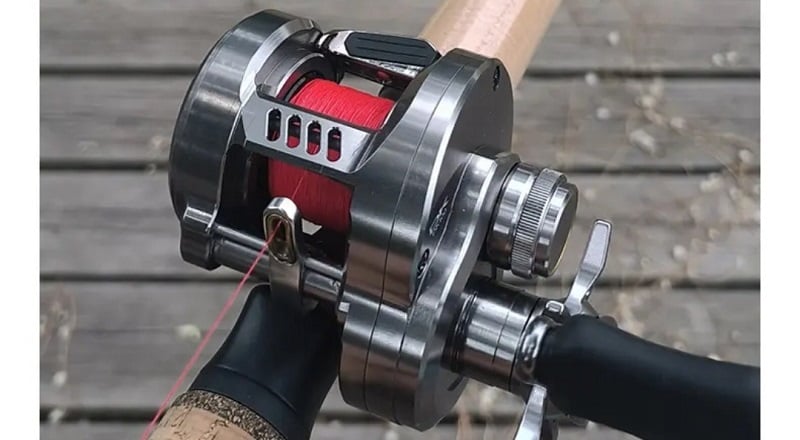

I like Daiwa baitcasters. I really do. That is part of why the current Lexa conversation is interesting instead of cheap drama. When people start talking about a fix thread for a reel like the Lexa, it is not because the reel is irrelevant. It is because the reel is important enough that anglers keep buying it, keep fishing it hard, and keep caring enough to diagnose what is going on when something feels off.
That is the right tone for this topic. Not panic. Not fanboy denial either. Just honest fishing talk.
The latest Lexa buzz is not only the old familiar stuff like 'great power reel,' 'excellent for big baits,' or 'serious saltwater-capable low-profile reel.' Now there is another strand mixed into the conversation: a specific mechanical worry around the clutch and re-engagement behavior. In a recent repair thread, one owner described a clutch part sliding and interfering with the lower spring, causing intermittent disengagement trouble and warning that repeated episodes could eventually chew on the pinion. That does not mean every Lexa is broken. It does not mean the whole line is junk. It means the current Lexa story has become more realistic. It is now about power and owner fixes.
Honestly, I think that makes the topic more useful for normal anglers, not less.
A lot of fishing tackle content online acts like products live in perfect little boxes. Freshwater reel. Saltwater reel. Big-bait reel. Inshore reel. Problem solved. Real fishing life is not like that. Real fishing life is somebody in Corpus Christi throwing a heavier paddletail one weekend, then taking the same combo to a lake outside Dallas for glide bait practice, then wondering if this reel is really as bombproof as it felt during the first month. Real tackle decisions happen in that messy crossover zone.
That is why Lexa has such a strong pull. It is one of those reels that makes anglers want to stretch its role. It looks like a reel that can handle more. It feels like a reel that can handle more. Daiwa markets it like a reel that can handle more. And most of the time, that instinct is not wrong. The Lexa TW is still one of the most attractive low-profile Daiwa options for anglers who want real torque, real line capacity, and a reel that feels serious when the lure is heavy and the fish are not polite.
But the current conversation forces a better question than 'Is Lexa good?'
The better question is, 'when is Lexa the right choice, and when should you reach for another Daiwa because your actual fishing scenario rewards mechanical calm more than brute personality?'
That is where this gets good.
If I am fishing around San Diego Bay, making repeated casts with heavier swimbaits, wanting a low-profile reel that still has the posture of a power reel, I understand exactly why Lexa keeps getting attention. Same thing if I am slow-pitch curious, or throwing bigger artificials around structure, or building a compact setup that still feels like it can bully a fish. Lexa has that kind of magnetism. It does not feel delicate. It does not feel like a toy. It feels like a reel with shoulders.
And that is precisely why the clutch discussion matters.
Because with a reel like this, anglers are not only asking whether it casts well or fights fish well. They are asking whether the mechanism will stay confident when the reel is used the way people actually want to use a Lexa: hard, often, and with some ambition.
I think that is what separates good tackle writing from brochure writing. Brochure writing only repeats the strong points. Good tackle writing pays attention to the places where users are actively leaning on the product. If owners are talking about clutch behavior, disengagement, and pinion wear, that is not random noise. That is one of the real current clues of the market.
At the same time, I do not think the smart takeaway is 'skip Lexa.' That is too lazy. The better takeaway is that buyers need to separate 'power desire' from 'assignment discipline'.
Some reels get bought because they are easy and pleasant. Some get bought because they make you dream a little bigger. Lexa is more in the second category. It is the reel that makes an angler think, 'I can throw that bigger bait.' 'I can fish that harder edge.' 'I can build one setup that covers more than it should.' That is not a flaw. That is part of its appeal.
But it also means buyers need to be more honest with themselves.
If your actual fishing is mostly light inshore work, smaller plastics, popping cork duty, redfish and trout around marsh drains, and long days of repeated casts from a kayak near Port O'Connor or Charleston, there is a very strong argument that the 'Coastal SV TW 150' is the prettier answer. Not prettier in looks. Prettier in assignment. It is compact, palmable, and very clearly aimed at light-tackle inshore saltwater. That matters. There is a kind of peace that comes from buying the reel that obviously belongs there.
If your fishing gets more serious on the salt side, a bit more lure, a bit more force, a bit more jetty, a bit more nearshore roughness, then the 'Coastal TW 200' starts looking like one of the most intelligent picks in the whole Daiwa baitcaster discussion. What I like about it is not just that it is salt-focused. It is that Daiwa is talking about it in a way that lines up with the current mood of buyers: durability, stronger gear teeth, inshore and nearshore work, corrosion-resistant performance, and a tougher clutch story. That is exactly the sort of language a cautious buyer wants to see after reading owner repair chatter elsewhere.
Daiwa baitcasting fishing reel Latest Buzz & Buyer Beware (Constantly Updated)
Pro Tips for Anglers
Then there is the Lexa. The reel everybody still wants to touch.
I get it. I have held reels that immediately made me think less about theory and more about the next cast. Lexa has that vibe. If I am planning a setup for heavier swimbaits on Lake Fork, or a reel that has enough mass and authority for bigger fish without jumping all the way into a different style of reel, Lexa still makes a lot of sense. It remains a compelling product because its strengths are not imaginary. The power is real. The role is real. The market affection is real.
That is why the current fix discussions are actually healthy. They keep the buyer grounded.
What I would not do is pretend that every Lexa owner is dealing with these issues. That would be unfair and inaccurate. Plenty of anglers fish Lexas hard and stay happy. That is part of why the reel has lasted and why the name still carries weight. But I also would not ignore the fix thread as if it were meaningless. It is not meaningless. It tells us what some owners are actively paying attention to right now.
For readers who are newer to baitcasters, this is where a lot of expensive mistakes happen. People think all problems are equal. They are not. Some product complaints are vague and emotional. Some are specific and mechanical. A specific mechanical complaint is more useful because it gives the buyer a choice: either buy the product anyway and be ready to monitor it, or choose a different model whose current buzz is less about fixes and more about fitting the job.
That is a much better shopping mindset than just looking at stars and price.
Here is how I would personally frame the four reels that make the most sense around this topic.
Disclosure: As an Amazon Associate I earn from qualifying purchases.
'1) Daiwa Coastal TW 200 - the safest 'serious salt' answer in this conversation'
This is the reel I would show first to the buyer who read about Lexa clutch chatter and still wants a substantial Daiwa baitcaster for inshore or nearshore work. It feels like the most balanced answer if you want saltwater intent, more strength than the smaller inshore reels, and less reason to center your purchase around owner fix discussions.
'2) Daiwa Lexa TW - still the reel for anglers who want power and personality'
I am not excluding Lexa because that would miss the point. Lexa is here because it is still desirable. If your fishing really calls for more grunt, more reel, more low-profile power, and you are the kind of owner who pays attention to service and mechanical feel, this remains one of the most tempting Daiwa buys in the category.
'3) Daiwa Coastal SV TW 150 - the cleaner pick for lighter inshore use'
If your real life is more redfish, trout, docks, grass edges, and all-day casting than brute-force power work, this is the reel I think many buyers should choose before they talk themselves into something heavier. It is the more disciplined and often more enjoyable answer for that lighter inshore lane.
'4) Daiwa Tatula 300 - for anglers who love Daiwa power but mostly fish big freshwater presentations'
This one belongs here because a lot of anglers think they want a salt-and-big-bait crossover reel, but what they really want is a very capable Daiwa power caster for oversized freshwater lures. If that is you, Tatula 300 may be the smarter and calmer answer.
That is why I do not like shallow product recommendations. The best pick changes when the buyer becomes honest about the water, the lure size, and the kind of ownership they want. Some anglers are perfectly happy owning a powerful reel that they inspect, service, and monitor. Some want something that feels more purpose-built and mentally quieter. Neither type is wrong. They are just different buyers.
And yes, there is an emotional piece to this. A reel that nags at your mind is not the same as a reel that frees your mind. If I am launching before first light in Galveston, or loading the truck for a Charleston jetty afternoon, or walking toward a windy shoreline with expensive baits in the box, I want my head in the water and the retrieve, not in a spring and clutch assembly.
That does not mean I stop admiring Lexa. It means I assign it more honestly.
Some of the best tackle buying decisions happen when we stop shopping for fantasy and start shopping for our actual weekends. Are you really slow-pitching heavy stuff and throwing larger baits often enough to justify the bigger power reel? Are you mostly making repeated inshore casts from a kayak where compactness, comfort, and salt-focused design matter more? Are you actually a freshwater big-bait angler who just likes the sound of a salt-capable reel? Those questions save money.
I also think this current Lexa topic teaches something broader about fishing gear. Good products do not become bad products just because owners start talking about fixes. Sometimes the opposite is true. When a reel gets used hard by serious anglers, the weak points become visible. That visibility is useful. It helps the next buyer think with more precision.
And honestly, I would rather buy in a market where users openly discuss a clutch issue than in a market where everybody only repeats marketing language. Real owner talk is valuable. It tells you what kind of relationship a product asks from you.
So where do I land?
If I want the most balanced answer for this specific article theme, I start with the 'Coastal TW 200'. If I want the most seductive power option and I am willing to own the mechanical conversation instead of pretending it does not exist, I still look hard at the 'Lexa TW'. If I want the compact inshore specialist, I go 'Coastal SV TW 150'. If I realize my real use case is big freshwater baits, I choose 'Tatula 300' and stop forcing the wrong saltwater fantasy onto the purchase.
That is a more mature way to read the current Daiwa baitcaster buzz. Not brand panic. Not blind brand faith either. Just better assignment.
'Highly related YouTube video'
https://www.youtube.com/watch?v=53bwDWcq5I8
'Sources'
Reddit discussion about Lexa TW vs Lexa, including mid-cast re-engagement concern
Reddit discussion comparing Coastal SV150TW and Lexa 300TW for inshore and saltwater use
YouTube: A Look at the NEW 2021 DAIWA LEXA TW 400 + Review
The main theme is simple: the Lexa is still a reel anglers want, but the smartest Daiwa buy comes from matching that power to the right job and respecting the mechanical clues owners are talking about right now.


